The first case
How Shira's book was born
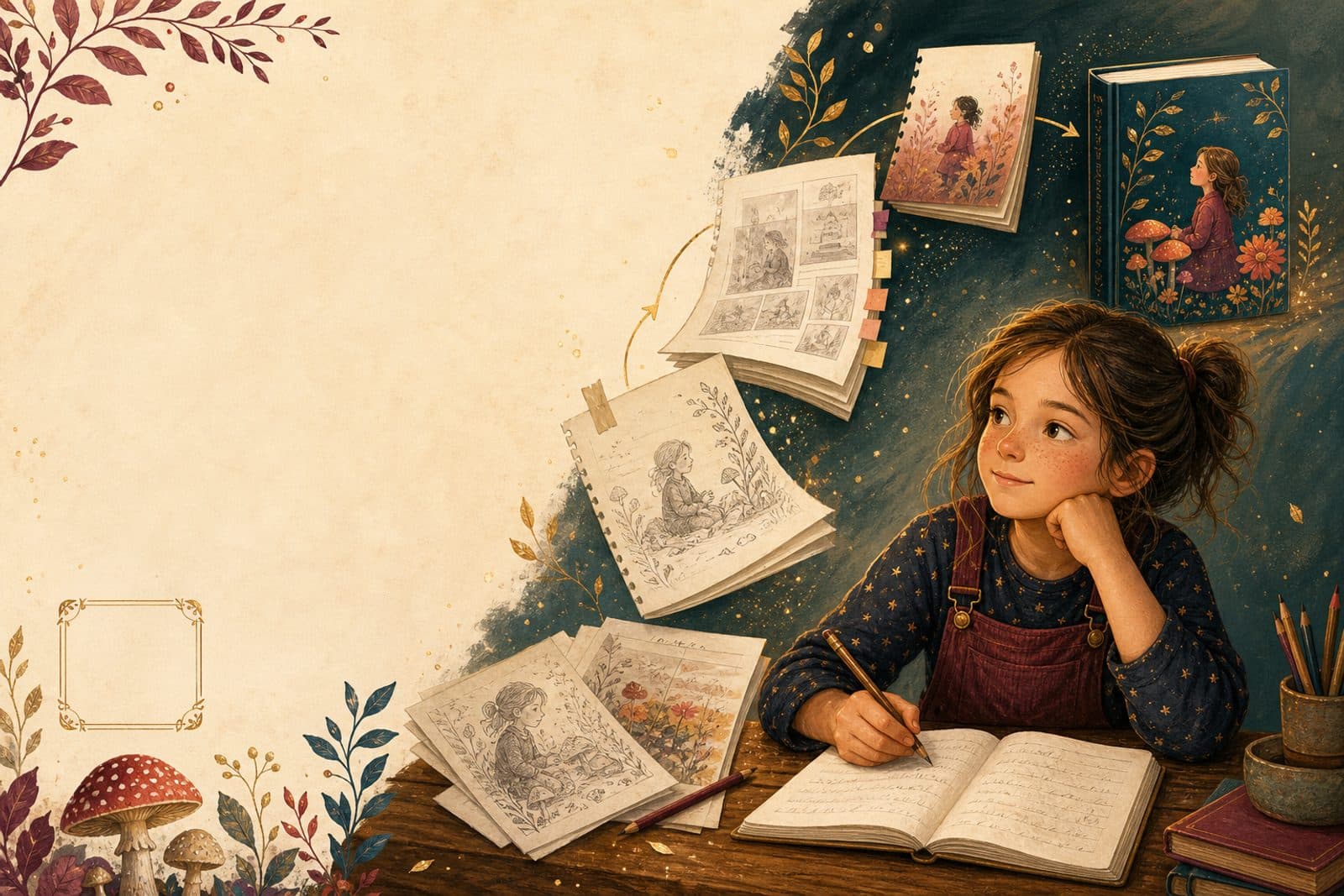
Shira Drori, 11, wrote a book called "The Library of Things That Never Happened". This is the story of what happened between the iPhone sketch and the printed book, and it is how the studio works to this day.

The AI does not write in the child's place. It keeps the original, spots problems, explains them, and asks only the questions that only the author can decide.
How it started
During a trip abroad in the summer holidays, Shira wrote a sketch of a story on her iPhone and sent it to us. We read all of it and sent back two things: first illustrations, and questions. Spelling we corrected. Things that did not line up in sequence we looked into and arranged together with her. But what Shira wrote stayed as it was, we only commented. For example the full stop before the "and": "Inside it was dark. And a smell of old paper." That is not a mistake, it is the author's fingerprint, and it stayed in the book.
The parent's request
Shira is only 11 and has already decided to write a book. She wrote everything down here. Go over spelling and grammar without ruining it, adding or changing too much. If parts are really missing or not written right, add it for her as comments.
Four rules came out of that sentence, and they became the rules of the whole studio:
- 1The text belongs to ShiraNo permission to "improve" it into an adult editor's voice. "Inside it was dark. And a smell of old paper." stays exactly like that.
- 2Fixing and inventing are different actsWe can suggest a spelling fix. We cannot decide on our own why a character does what she does.
- 3Unclear becomes a questionNot new text. Every confusing spot got a question, with an explanation of why a reader might get lost.
- 4The book is finished with ShiraNot behind the scenes, and not only between the parent and the AI.
Six questions for the author
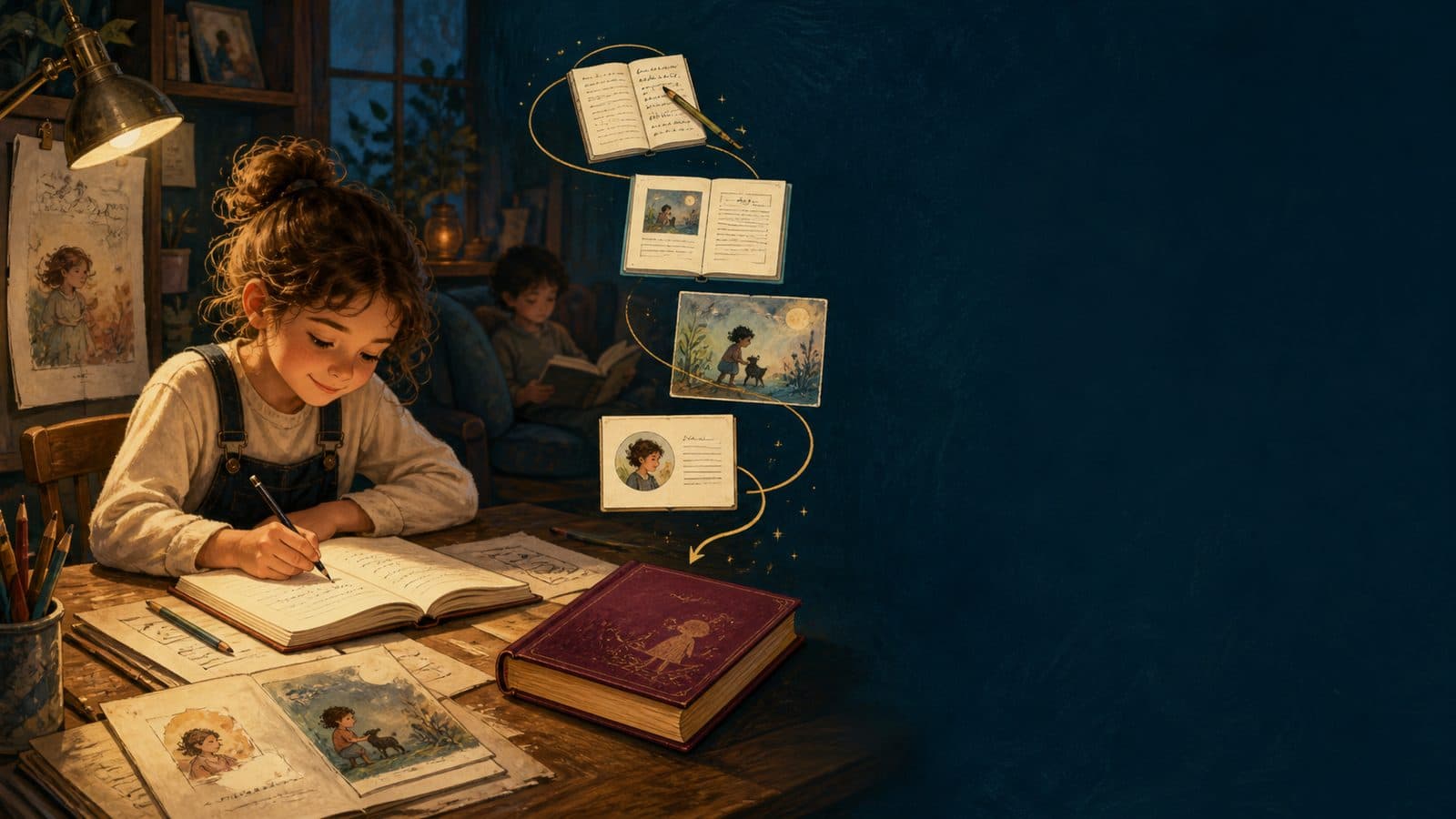
Instead of a list of corrections, Shira got a short message with six questions. Not about spelling, only about things she alone could decide. For example:
- Time in the libraryOri enters the library at recess, but in the secret library it is already 11 pm. What happens to time when you pass through the door?
- How many books need saving?First eight are left, then seven, and suddenly we reach the last one. What happened to the rest?
- The last ruleIt says someone must give up her memories, but Ori writes a new rule. What lets her change the rules?
The message ended like this: "Don't change the whole book for now. Just answer however you like. You are the author, so the library's rules are yours."
The moment Shira stopped us
To one question Shira answered with a question: why do we need to explain how the magic works at all? And she was right. Not every magic needs an explanation. So instead of making her invent a mechanism, we explained what might confuse a reader, and she chose wording that keeps the mystery. Two words of dialogue solved everything.
Since then it is a studio rule: when a child rejects a question, we explain what we were trying to solve and offer the smallest fix. Including leaving it mysterious.
The illustrations too: character first, then scenes
The AI draws beautifully, but it does not understand the story. The first output was almost never the final one: we looked, asked Shira, and fixed.
Define the character before drawing
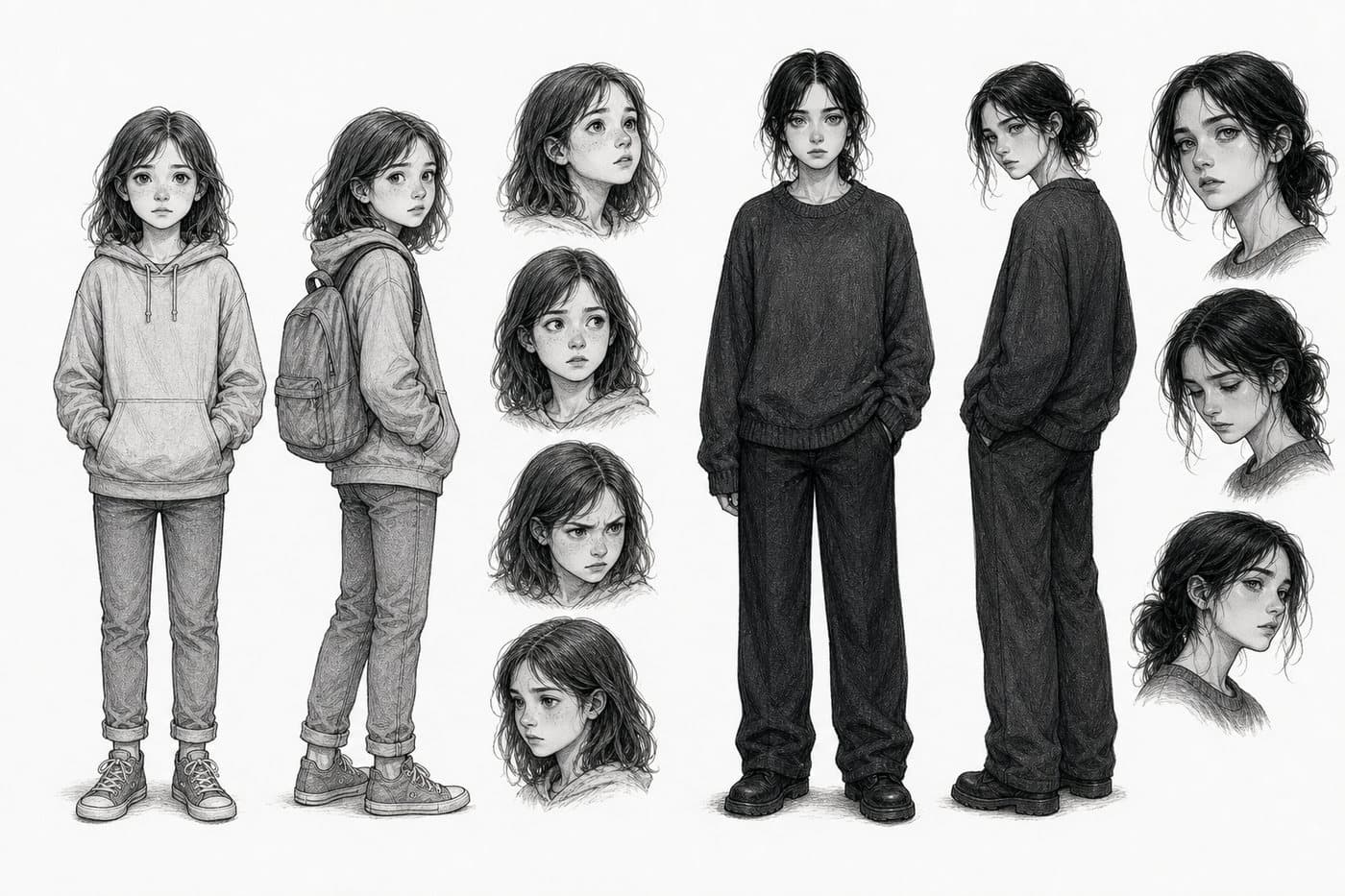
We did not ask for "a girl in a library". First we built a character sheet for Ori and for Rotem: hair, clothes, expressions, fixed colours. Every illustration in the book was made from that sheet, so the characters look the same on every page.
 After
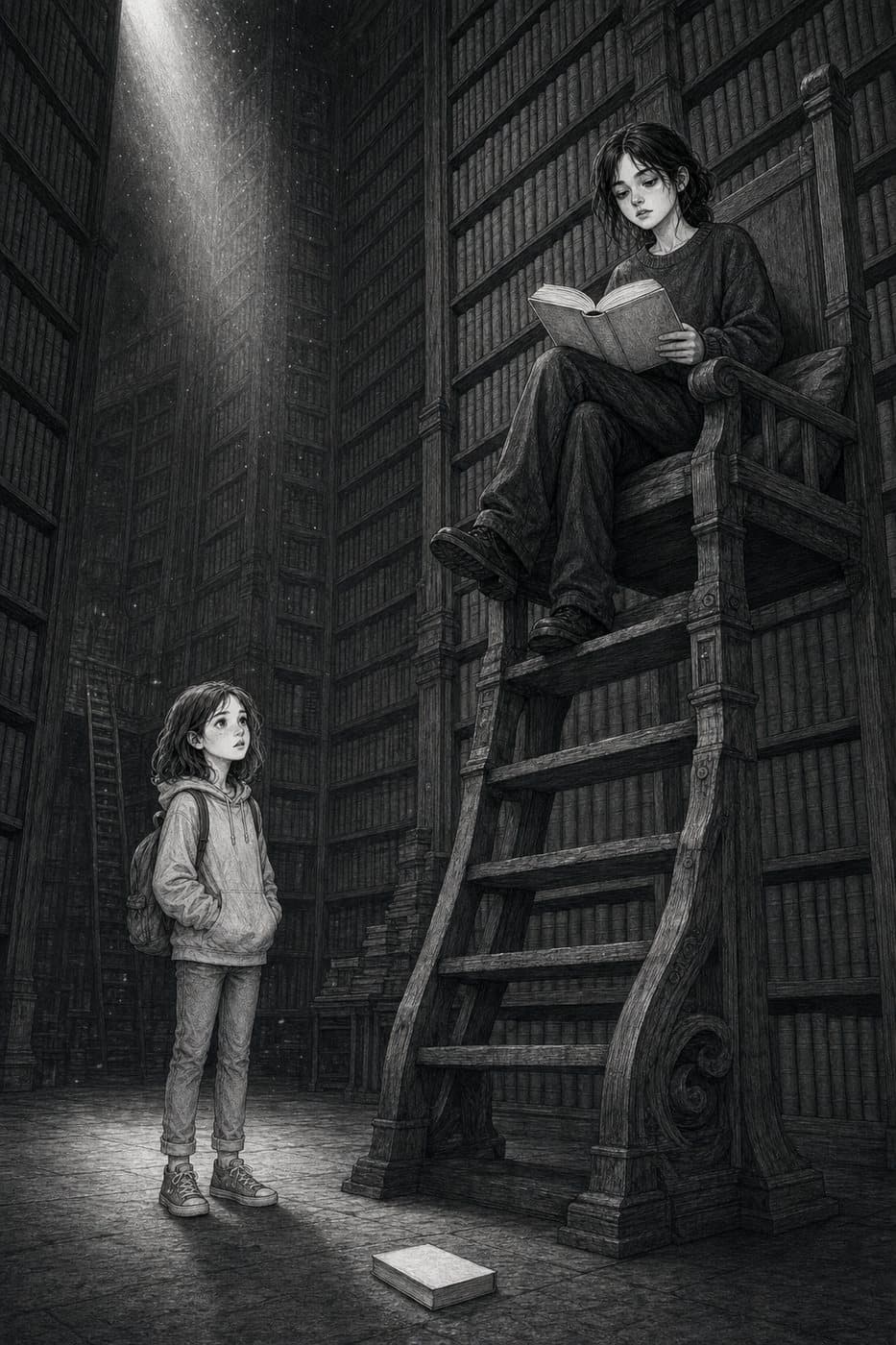
AfterWe started in black and white. Shira asked for colour.
The first direction was pencil illustrations, like classic mystery books. Shira looked and said she wanted a colour book. The author decides, so we redrew the same scenes.
 After
After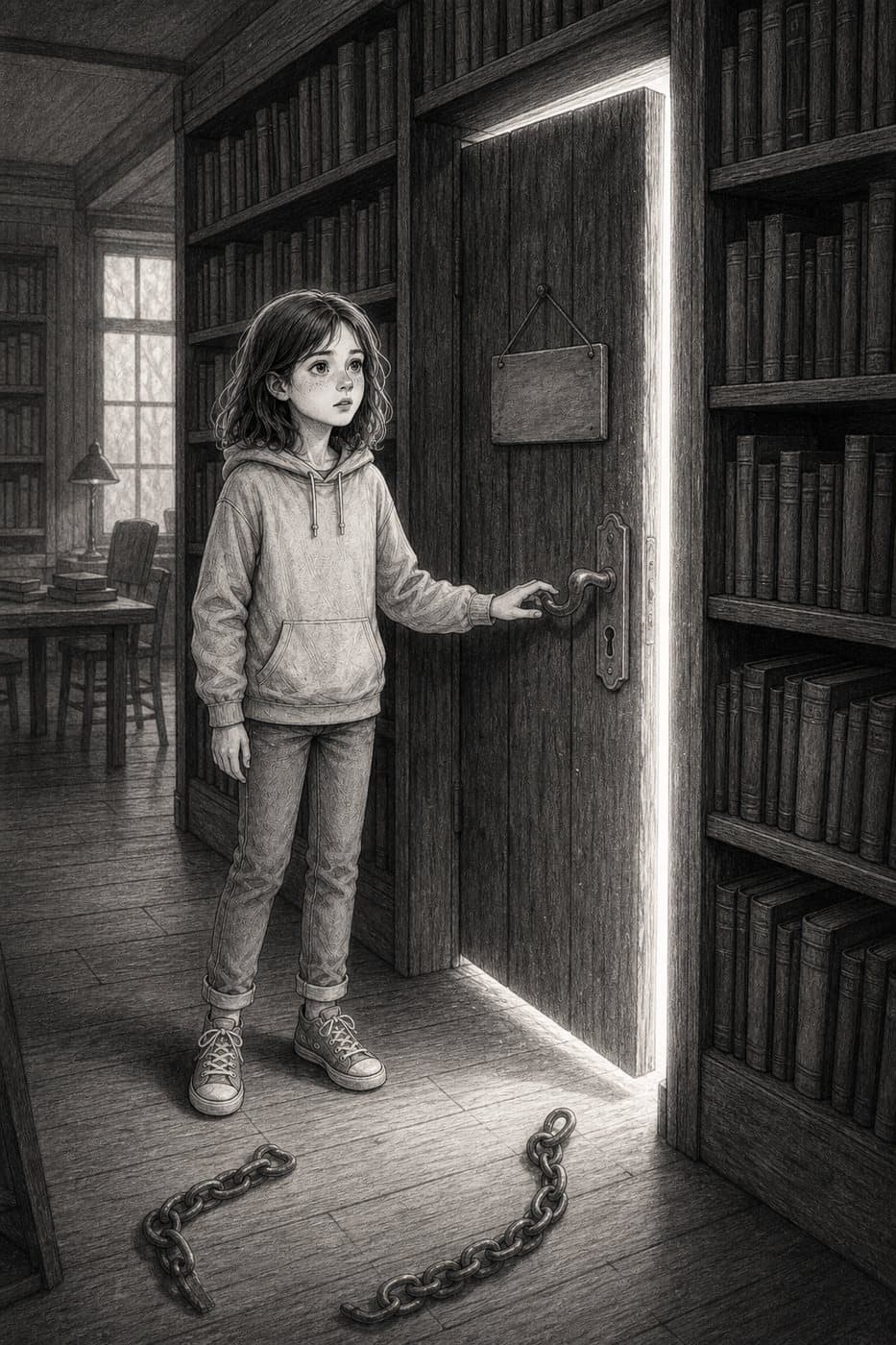
 After
AfterThe first output is not always logical. We fix it.
Which way are they walking?
In the story Noa and Ori walk together to class, toward the light. In the first illustration they walk toward us, out of the scene. Pretty, but not the story.
 Before
 After
AfterWho sees the screen?
Ori and Rotem watch the security video. In the first illustration the screen faces us, and the characters cannot see it. We asked for an over-the-shoulder view.
 Before
 After
AfterReal creation is not the first output. You receive, you look, you ask "is this what the story says?", and you fix.
What we learned
- The original manuscript is kept, and you can always see what Shira wrote and what was suggested.
- Few questions, clear, tied to an exact spot in the story.
- "I don't know" and "let it stay mysterious" are good answers.
- The child's short sentences and rhythm are her voice, not a mistake.
- At the end the child confirms: "It still sounds like me." Only then do we move on to illustrations and print.
- Adults' notes are checked against a source too: when an author flagged the comma inside the quotation marks, we checked the Academy of the Hebrew Language's punctuation rules, found two valid methods, and chose the one publishers use.
Source: the Academy of the Hebrew Language punctuation rules, section 28
And what Shira added herself
A blank page at the end of the book, titled: "Now it's your turn. What would you like to happen tomorrow?" Nobody suggested it to her.
Read the book
The next story could be yours
If a child of yours has already written something, that is enough to begin.
Start here